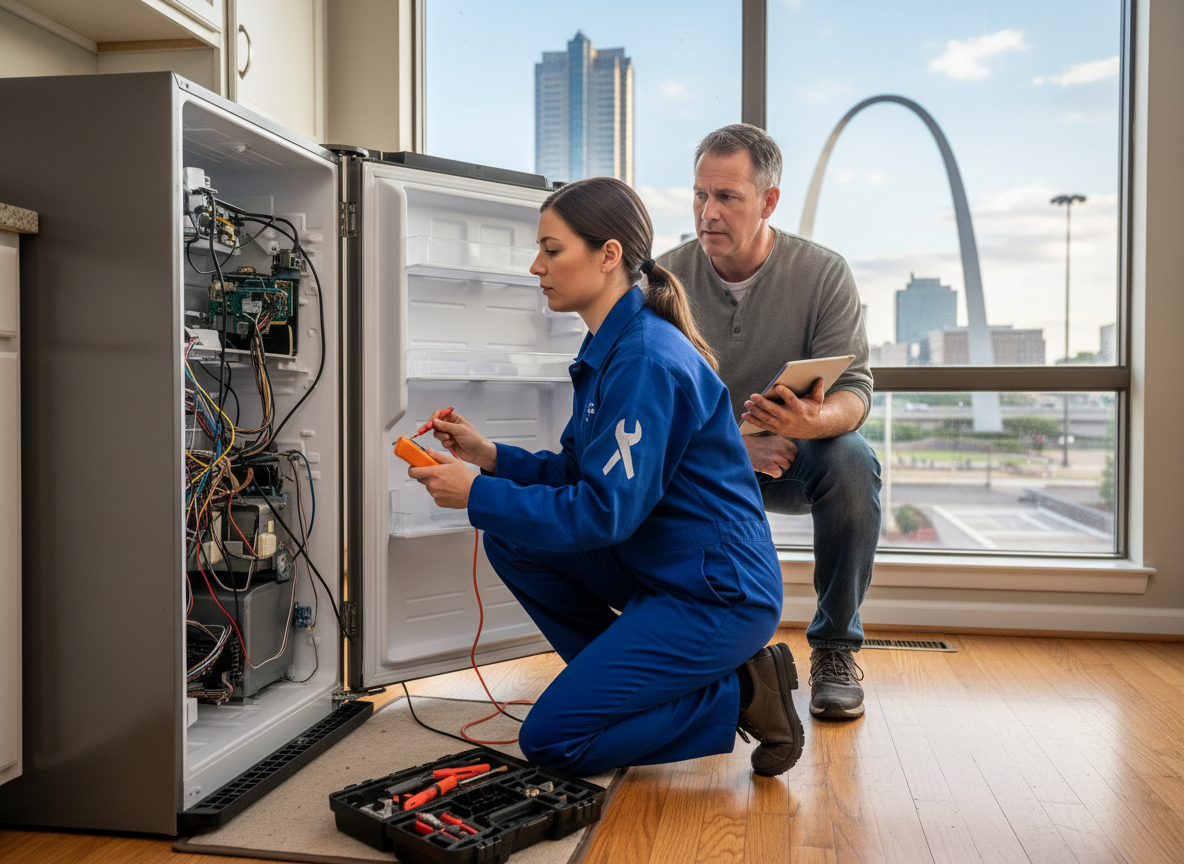
St. Louis homes in Soulard and Lafayette Square often date to the late 1800s with narrow service panels and knob-and-tube wiring that complicates modern appliance hookups. Technicians at SkillArbor frequently trace tripped breakers or melted plugs back to these original circuits rather than the appliance itself. Humid summers and sudden thunderstorms common in the independent city push refrigerators and washers into overload when humidity spikes inside older basements.
In Tower Grove South and Forest Park Southeast, post-war bungalows sit on clay soil that shifts with heavy rains, tilting leveling legs on ranges and dryers until doors no longer seal. Technicians check both the unit and the floor slope before ordering parts. Cold winters send residents in Carondelet and Benton Park running space heaters near laundry rooms, which can trip GFCI outlets dedicated to appliances and create intermittent failures that only appear during peak load.
Downtown and Midtown high-rises add another layer with shared laundry rooms on upper floors where water pressure and venting differ from single-family homes in Webster Groves or University City. SkillArbor techs carry extra vent brushes and condensate pumps sized for these buildings because standard kits fall short. Service calls start at the 4573 Gravois Ave base and reach these varied addresses within the same day when scheduled 24/7.
Technician insight
In St. Louis, the thing that catches most people out with Appliance Repair Near Me is how our frequent severe storms and high summer humidity accelerate corrosion on control boards inside older homes in Shaw and Benton Park where basement moisture never fully dries.
Soulard Townhouse Dryer Failure
A resident in Soulard reported the dryer shutting off mid-cycle during a humid stretch. We found the exhaust vent clogged with clay dust from shifting soil under the 1890s foundation and a weakened thermal fuse from repeated storm-related power surges. We cleared the vent, replaced the fuse, and adjusted the leveling legs on the sloped floor. The unit now completes full cycles without tripping.
How it works
- 1
Initial Call Intake
Gather model numbers, symptoms, and neighborhood details to prepare the right tools and common parts before leaving the Gravois Ave location.
- 2
On-Site Assessment
Inspect the appliance, power supply, and surrounding conditions such as floor slope or venting in older St. Louis stock.
- 3
Diagnosis and Quote
Identify the fault, explain options, and provide an upfront price before any work begins.
- 4
Repair and Test
Complete the fix, run the unit through cycles, and confirm safe operation under local voltage and humidity conditions.
- 5
Follow-Up Notes
Leave written guidance on maintenance tailored to St. Louis weather and the specific housing type.
Pricing
Upfront quotes given on site after diagnosis; price depends on parts availability and unit age.